
Agent memory vs shared team context (fair compare)
Agent memory keeps one assistant current. Shared team context keeps the org aligned. A fair compare of per-agent stores vs BitsWeave.
Your agent just shipped a careful change. The next agent — or the next person — opens a new session and asks the same questions again. The decision lives in a chat nobody else can see. The ticket is updated. Slack has a thread. The model starts from zero.
That gap is why people search for agent memory. The phrase sounds like one product. It is two jobs. One job keeps a single assistant current. The other keeps a team aligned. Mix them up and you buy the wrong layer.
This is a fair compare. Per-agent memory products do real work. So does shared team context. They solve different failures. BitsWeave sits on the second job. See What is BitsWeave? if you want the short product picture first.
The problem people actually have
Most teams do not lose facts inside one chat. They lose the work across chats, tools, and people.
A coding agent remembers a file it just edited. It does not remember last Tuesday's approval unless someone pastes it. A support agent can recall a user's last ticket in its own store. It cannot see a decision a teammate made in a different product. Multi-agent setups make this louder: each agent has a private notebook, and the org still has no shared page.
You end up as the memory. You carry context between sessions. You re-explain the same constraints. Two kinds of software showed up to help. They are easy to confuse because both say "memory."
What agent memory usually means
When vendors say agent memory or AI agent memory, they usually mean a store attached to one agent or one user.
Products in the Zep and Mem0 family extract facts from conversations. They keep a timeline or a graph of entities. The next turn queries that store and injects the relevant bits. The unit of memory is the assistant — or the user talking to that assistant.
That design is honest. A chatbot that forgets your name or last bug is a bad product. Per-agent memory is retrieval over a person's history with that agent.
Typical traits:
- Scope is a user, a thread, or a single agent runtime.
- Writes come from conversation turns and extracted facts.
- Reads go back into the same agent's prompt.
- Success looks like "this assistant stopped asking me again."
If you are building a consumer copilot or a support bot, that is often the right buy: AI agent memory close to the model loop.
What shared team context means
Shared team context is a different object. The unit is the organization, not the assistant.
People and agents read the same living model of the work. Sessions, tools, records, and decisions land in one place. The next session starts with that baseline already in place — even when a different person or a different agent opens it.
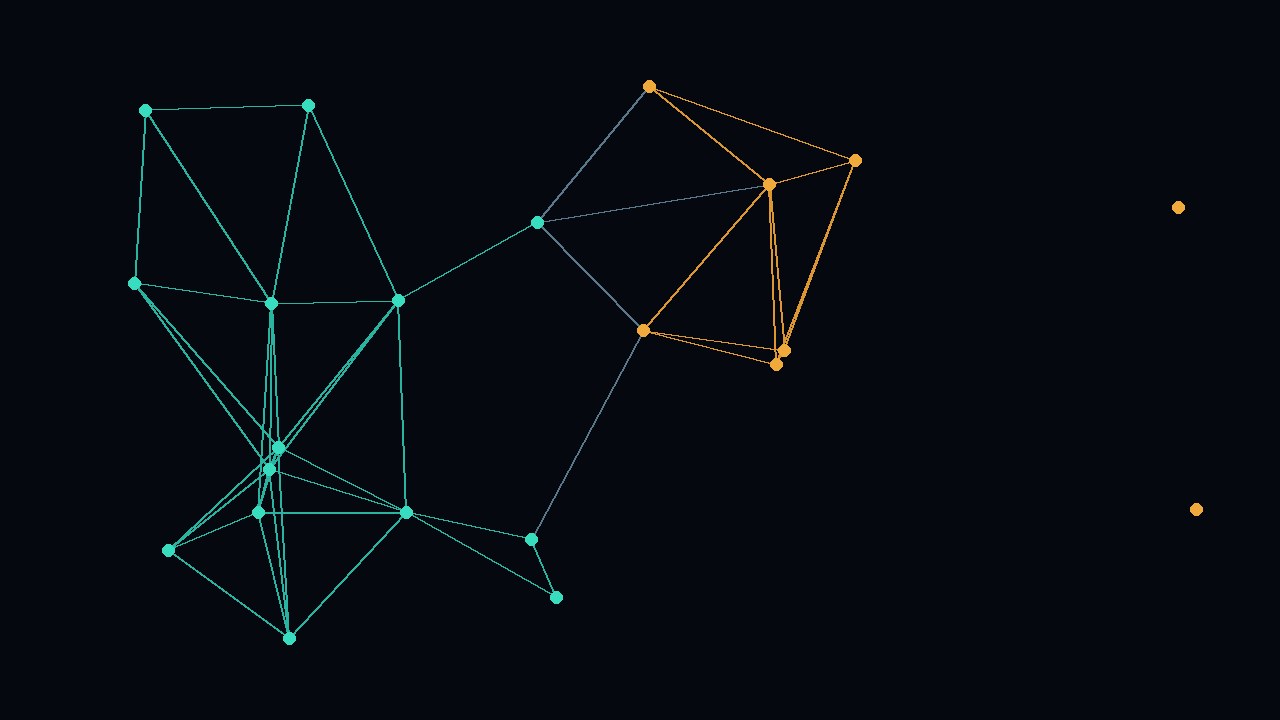
BitsWeave is built for that job. It learns from the work you already do. It connects the apps the org already uses. Agents search those tools through one brokered surface. Credentials stay with the organization. The context graph is the map: what happened, what it links to, and who can see it.
Typical traits:
- Scope is the org — teammates and every connected agent.
- Writes come from sessions, tools, records, and human approval.
- Reads are available to people and agents, not only one runtime.
- Success looks like "we stopped re-explaining the business."
This is closer to a workspace than to a memory plugin. Memory is a side effect of shared work, not a bag of embeddings tied to one model.
Fair compare: same word, two layers
Use this as a buying filter. Neither side is a scam. They answer different questions.
Who is the memory for?
Per-agent memory serves the assistant in front of one user. Shared team context serves the org. If two agents cannot see the same decision unless you paste it, you have two private notebooks, not team context.
What gets stored?
Agent-memory products store extracted facts, preferences, and conversation state. That is the right grain for a chat that should feel continuous.
Shared team context stores the work itself: sessions, records, decisions, and links across apps. The next person can start from the same objects, not a summary of a summary. For how decisions become records — and what happens next — see decisions, records, next steps.
Where does truth come from?
Per-agent stores mostly watch the dialogue. They are strong when the conversation is the work.
Shared team context watches the tools and the sessions. A pull request, an alert, a note, and a human gate all feed the same graph. That matters when the work already lives in GitHub, Grafana, or a ticket queue — and the chat is only one window onto it.
Who is allowed to remember?
A personal memory layer can be correct and still be the wrong governance model. The agent holds the history. The org hopes the prompt did not leak.
Shared team context puts credentials, roles, and write gates on the org side. Agents reach tools through one surface. Capture can be redacted. Procedures are logged. That is architecture, not a policy PDF.
What does "multi agent memory" actually mean?
Multi agent memory is the phrase that hides the fork.
Some stacks share one store across several runtimes — still keyed to a user or a session. Several agents can read the same personal facts. That is useful. It is still per-user memory with extra readers.
The other meaning is org-shared context: a decision made in one session is every teammate's baseline by the next. People stay in the loop. Agents are participants, not a special class of memory client.
If your pain is "my swarm forgot the user preference," buy per-agent memory and share the store. If your pain is "the team re-litigates the same call every Monday," you need the second meaning.
When per-agent memory is the right tool
Buy a Zep-style or Mem0-style layer when the product is the assistant.
- One user talks to one agent for a long time.
- Continuity inside that relationship is the feature.
- You need fast recall of preferences, entities, and prior turns.
- You do not yet need every teammate to share the same objects.
Those products are good at that loop. They chose a tighter job and did it.
You can run them next to BitsWeave. A personal copilot can keep user-level agent memory. The org can still keep shared context for work that must outlive any one chat.
When shared team context is the right tool
Buy shared context when the failure is cross-tool and cross-person.
- Agents start from zero in every new session.
- Context evaporates per person.
- Two agents disagree because they never saw the same record.
- You keep pasting Slack into prompts.
- A decision has no home except a thread that scrolls away.
This is the BitsWeave wedge. You have been the memory. The more the team builds, the less they should have to explain. See What is agentic memory? for the idea. BitsWeave is the workspace that holds it.
Do not replace your coding agent. Point it at a shared home. BitsWeave records the sessions you already run. It gives agents a durable place for notes, decisions, and tasks, and one audited MCP surface across connected tools. People see the same graph the agents see.
If you only need an assistant that remembers you, a per-agent store is simpler. If you need agents and people to share one model of the business, start with shared team context. Then add personal agent memory where a single relationship still needs it.
A short buying check
Ask one question in the demo: after this session ends, who can use what we just learned — and in which tool?
If the answer is "this agent, next turn," you are looking at agent memory. If the answer is "the org, the next person, and any connected agent," you are looking at shared team context.
Most teams need both: remember the user where the product is a chat; remember the work where the product is a company. BitsWeave is the second layer. Keep the first layer with the memory product that already fits your assistant. They are not the same SKU.